It’s 6 a.m. Your alarm is buzzing, the room is freezing, and your blanket is warm in all the right ways. You tell yourself, “Tomorrow, for sure.” Tomorrow turns into next week, and by January your gym bag is still sitting in the corner, untouched.
We know the cold weather can make it harder to stick to your workout routine. Those cosy blankets and chilly mornings can make you want to skip the gym, and that's completely understandable. But winter can actually be a great time to focus on your fitness, build strength, and develop habits that stay with you throughout the year. All you need is a simple winter workout routine that keeps you moving and helps you get stronger. Here's how you can get started.
- Warm Up for Longer in Winter
Cold weather makes muscles feel tight and stiff. If you walk in and go straight to heavy lifting, you are asking your body to do too much, too soon. A proper warm-up raises your body temperature, loosens your joints, and prepares your muscles for the work ahead. It also lowers the risk of injury.
A good winter warm-up takes 5 to 10 minutes. Here is a simple way to do it:
- Light cardio: Walk on the treadmill, cycle slowly, or march on the spot.
- Dynamic stretches: Try arm circles, leg swings, hip rotations, and shoulder rolls.
- Easy first sets: Start your first exercise with a light weight and build up gradually.
If you are a beginner, don’t rush this part. A longer warm-up is perfectly fine.
- Go for Strength Building Exercises
Compound exercises are movements that work several muscle groups at the same time. They are the backbone of strength training in winter because you get more done in less time. They also improve coordination and help you move better in daily life, whether you are lifting a bag or climbing stairs.
Build your sessions around these:
- Squats for legs and glutes
- Deadlifts for the back, hips, and hamstrings
- Bench press for chest, shoulders, and arms
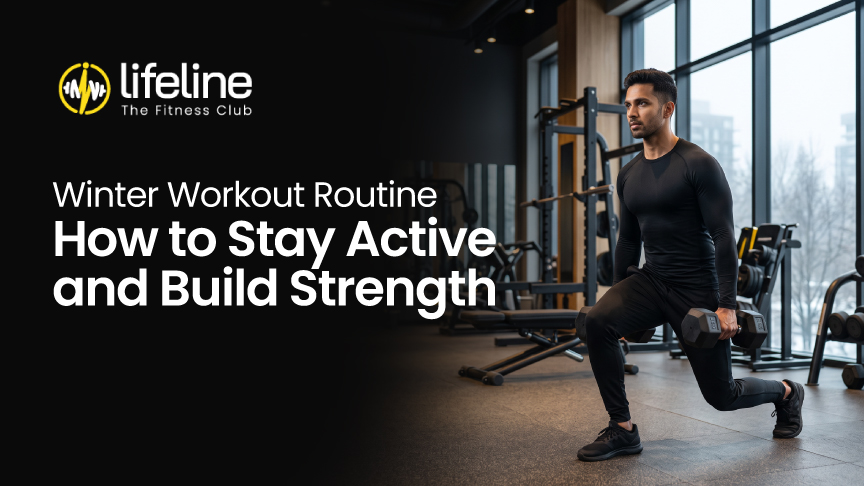
- Lunges for legs, balance, and stability
- Push-ups for chest, shoulders, and core
- Lat pulldowns for the back and arms
You don’t have to do all of them in one day. Pick three or four per session and focus on doing each one well.
Fit HIIT in Your Gym Workouts
HIIT stands for high-intensity interval training. In simple words, you work very hard for a short burst, then rest or move slowly, and repeat. For example, 30 seconds of fast effort followed by 30 to 60 seconds of recovery.
It suits winter gym workouts well because it is short, indoors, and keeps you warm. Good options include jumping jacks, mountain climbers, high knees, burpees, and cycling intervals. HIIT can improve your heart health and stamina, and a session can be done in 15 to 20 minutes.
Beginners should start with shorter bursts and longer rests. If you are breathless and dizzy, slow down. The right intensity is the one that challenges you without leaving you exhausted.
Focus on Progressive Overload
Progressive overload simply means making your workouts a little harder over time. Your muscles grow stronger when they are asked to do slightly more than before. If you lift the same weight for the same reps every week, your body has no reason to change.
You can apply it in several ways:
- Increase the weight slightly when an exercise feels comfortable.
- Add a few more repetitions.
- Do an extra set.
- Improve your form and control, such as lowering the weight slowly.
- Shorten your rest time carefully.
You don’t need to do all of these at once. And remember, progress takes time. Lifting too heavy too quickly is a fast route to injury. Focus on good technique and steady, small improvements.
How Do You Stay Motivated When It’s Cold?
This is the hardest part for most people. Motivation comes and goes, and that is normal. What really helps is a system that works even on lazy days. These winter fitness tips make it easier:
- Set realistic weekly goals, such as three sessions instead of six.
- Fix a gym time and treat it like an appointment.
- Keep your gym bag packed the night before.
- Find a workout partner who will notice if you don’t show up.
- Track small wins, like an extra rep or a heavier weight.
- Choose indoor exercises on days when the weather feels unbearable.
Good gym training motivation often comes after you start, not before. Tell yourself you will do just the warm-up. Most days, you will end up finishing the whole session.
Build a Balanced Winter Workout Routine for the Week
A strong week includes strength, cardio, mobility, and rest. Each one does a different job. Strength builds muscle, cardio supports your heart, mobility keeps you flexible, and rest lets your body recover and grow stronger.
Here is a sample indoor workout routine to give you an idea:
- Monday: Lower body strength (squats, lunges, deadlifts)
- Tuesday: HIIT for 15 to 20 minutes
- Wednesday: Upper body strength (bench press, lat pulldowns, push-ups)
- Thursday: Active recovery, light walking and stretching
- Friday: Full body compound lifts
- Saturday: Cardio or a second HIIT session
- Sunday: Complete rest
This is only an example. Your ideal winter fitness programme depends on your age, fitness level, schedule, and goals. A beginner may do three days a week, while someone experienced may train five. And that’s perfectly fine.
Frequently Asked Questions
How long should a winter workout be?
Most people do well with 45 to 60 minutes, including the warm-up. Beginners can start with 30 to 40 minutes and build up slowly.
How many days a week should I train in winter?
Three to five days works for most people. Beginners should start with three days and leave rest days in between.
Is it safe to skip the warm-up in cold weather?
No. Cold muscles are stiffer and more prone to strain, so a 5 to 10 minute warm-up is important before every session.
Make This Winter Your Season of Fitness
This winter, give yourself a reason to feel stronger, fitter, and more confident. Instead of letting the cold weather slow you down, use this time to focus on your health and make real progress towards your fitness goals. With the right winter workout routine, consistent effort, and a little guidance, you can make this season count.
At Lifeline-The Fitness Club, Boisar, we are here to make your fitness journey easier and more rewarding. Our experienced trainers, with over 10 years of experience, will guide you at every step. From modern cardio equipment and dedicated free weights to weight-training machines and crossfit, we have everything you need to work towards your goals. Whether you are just starting out or looking to take your training to the next level, our beginner-friendly environment and personal training support will help you find your pace.
So, why wait for the warmer days to get started?
Join Lifeline-The Fitness Club, Boisar, today! Prepare your body, build your strength, and make the most of your winter fitness arc. Let's work towards making your fitness goals a reality!
The best winter exercises include squats, lunges, push-ups, deadlifts, jumping jacks, cycling and brisk walking. These exercises help improve strength, stamina, flexibility and overall fitness. Combining strength training with cardio is an effective way to stay active during winter and maintain a consistent fitness routine.
Yes, going to the gym during winter is a great way to maintain physical fitness, build muscle and improve cardiovascular health. Indoor workouts also make it easier to exercise consistently without worrying about cold weather. A combination of weight training, cardio and mobility exercises can help you stay fit and work towards your fitness goals throughout the winter season.
For most beginners, working out three days a week is a good starting point for building muscle. As your strength and fitness improve, you can gradually increase your training frequency to four or five days. Focus on compound exercises, proper technique, progressive overload, sufficient protein intake and adequate recovery to support muscle growth.
