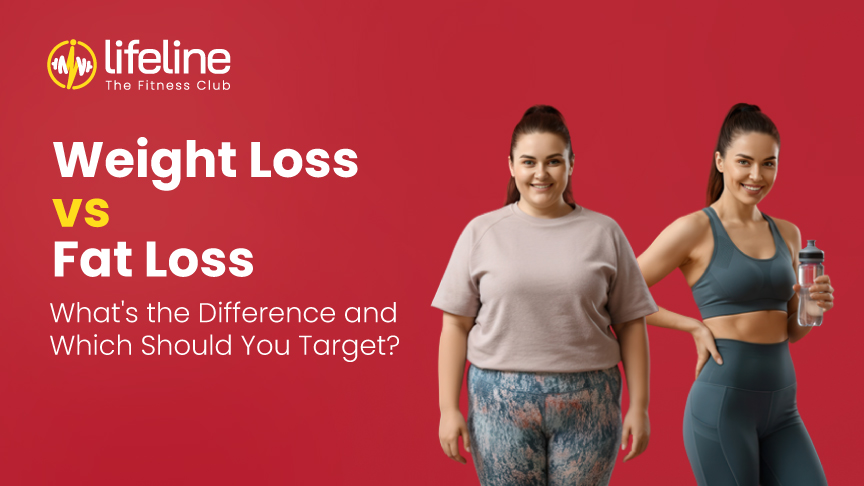
You step on the weighing scale every morning. Some days the number goes down and you feel great. Other days it barely moves, or worse, it goes up a little, even though you've been eating better and showing up to your workouts.
You know, that number on the scale is not telling you the full story. Most people use "losing weight" and "losing fat" as if they mean the same thing, but they don't always overlap. At Lifeline-The Fitness Club, we say to our members that understanding weight loss vs fat loss can completely change how you approach your fitness goals, and honestly, it can save you a lot of frustration.
Let's break down what's really happening in your body when that number changes.
What Is Weight Loss?
Weight loss simply means your total body weight has gone down. That's it. But your body weight is made up of several things, not just fat. It includes muscle, water, bone, organs, and even the food sitting in your digestive system at that moment.
So when the scale drops, it could mean you lost some fat. But it could also mean you lost weight after a salty meal, or your body dropped a bit of muscle because you skipped protein for a few days, or you're simply a little dehydrated. This is where it gets a little confusing. Two people can lose the exact same amount of "weight" and have completely different things happening inside their bodies.
What Is Fat Loss?
Fat loss, on the other hand, is much more specific. It means your body is actually using stored fat for energy, reducing fat tissue while ideally keeping your muscle intact. Think about it this way. Muscle is what gives your body shape, strength, and a toned appearance. If you lose weight but a large chunk of it is muscle, you might weigh less without necessarily looking leaner or feeling stronger. That's why preserving muscle while working on fat loss matters so much, especially if your goal is a more defined physique rather than just a smaller number on the scale.
Weight Loss vs Fat Loss: What's the Difference?
In simple terms, weight loss is a decrease in total body weight from any source, while fat loss is specifically the reduction of stored body fat. You can lose weight without losing much fat at all, and in some cases, you can even lose fat while the scale stays the same or moves slightly upward because you're gaining muscle at the same time. This is the core of the difference between weight loss and fat loss, and it's why so many people feel stuck even when the scale seems to be cooperating. When we talk about it, the real question isn't which number is smaller, but what's actually changing inside your body.
Which Should You Target?
Here's a simple way to think about your goal. Instead of chasing a lower number on the scale, it usually makes more sense to focus on reducing excess body fat while maintaining or even building muscle. This approach tends to give people the results they actually want, like feeling fitter, looking more toned, and having better energy through the day.
That said, the right goal depends on the person. Someone just starting their fitness journey might see the scale move quite a bit in the beginning, and that's completely normal. Someone further along, who has already built some muscle, might notice the scale barely changes even though their body composition is clearly improving. There's no one-size-fits-all answer here, and that's okay.
Check this interesting read on how to lose belly fat naturally?
How to Lose Body Fat Without Losing Too Much Muscle
If you're wondering how to lose body fat the right way, it usually comes down to a few consistent habits rather than anything extreme:
- Strength training a few times a week to protect and build muscle
- Getting enough protein through your meals so your body has what it needs to repair muscle tissue
- Eating a balanced diet instead of cutting out entire food groups
- Staying in a moderate calorie deficit rather than an extreme one
- Staying active through the day, not just during workouts
- Prioritizing sleep and recovery, since your body needs rest to make real progress
- Sticking with the plan consistently, rather than jumping between diets every few weeks
Learning how to lose fat and maintain muscle is less about willpower and more about building habits you can actually stick to over time.
Why Healthy Weight Loss Takes Time
Healthy weight loss is rarely fast, and that's actually a good sign. Quick drops on the scale are often water weight or muscle loss, not real fat loss. Sustainable body fat reduction happens gradually, and your body needs time to adjust, especially if you want to hold on to your muscle and energy levels. Give it a few months before expecting to see meaningful changes, and try not to judge your progress week by week. Also, it’s important to track your weight loss beyond the scale.
How Can You Track Progress Beyond the Scale?
The scale is just one tool, and honestly, not always the most useful one. Instead, pay attention to:
- Body measurements around your waist, hips, and arms
- How your clothes fit
- Your strength and performance during workouts
- Progress photos taken every few weeks
- Body composition checks, if your gym offers them
- How your energy feels through the day
If most of these are improving, you're on the right track, even if the scale isn't moving much.
If your goal is genuine fat loss rather than just a lighter number on the scale, the gym you choose matters. Look for a weight loss gym in Boisar, like ours, that offers structured strength training, not just cardio machines. It should have trainers who understand body composition, guide you on form, and help you stay consistent, along with an environment where you actually enjoy showing up.
Make Your Fat to Fit Journey Informed
Phew! Understanding weight loss vs fat loss helps you set realistic expectations and focus on progress that actually matters, not just a number that can fluctuate for a dozen different reasons.
At Lifeline-The Fitness Club in Boisar, our approach centers around helping members build strength, improve body composition, and develop habits that last, rather than chasing quick changes on the scale. Through structured workouts, guided strength training, and a supportive environment, our trainers help members understand what their body actually needs at every stage.
If you're in Boisar and ready to work towards a healthier, stronger version of yourself, feel free to visit Lifeline-The Fitness Club and have a conversation with our team. We'd be glad to help you get started, at whatever pace feels right for you.